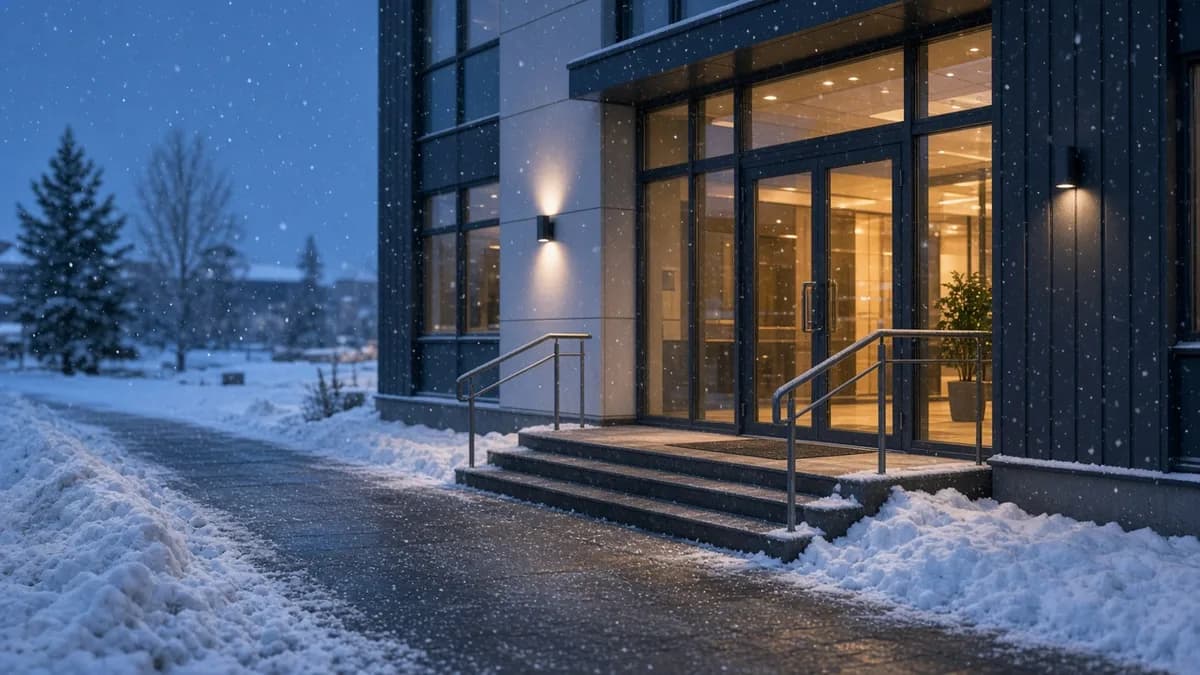
Finnish winters test every part of a commercial property. Snow, ice, darkness, freezing temperatures and wet grit tracked indoors all put pressure on entrances, technical systems, floors and the people responsible for keeping a building safe and open. This guide sets out a practical, step-by-step approach to winter preparation for property owners, property managers, FM managers and businesses operating premises in Finland.
The aim is simple: agree responsibilities, inspect the right things before the first heavy snowfall and keep a clear process for the problems that winter will still bring.
Why winter preparation matters
Most winter problems in commercial buildings are predictable. Slippery entrances, blocked gutters, uneven indoor temperatures, wet floors in lobbies, failed outdoor lighting and frozen pipework appear in some form almost every year. When they are handled reactively, they cost more, take longer to fix and disrupt tenants, staff and visitors.
Preparation moves the work into autumn, when contractors are easier to schedule and weather allows proper inspections. It also gives you a documented baseline: what was checked, when, by whom and what still needs attention. That record is valuable when you review contracts, budget for repairs or handle a claim after an incident.
For organisations with several sites, a common winter plan makes quality consistent across locations instead of depending on individual site habits. Our facilities management services are built around this kind of coordinated planning.
Inspect entrances, walkways and external areas
Start where people arrive. Walk the site with the person responsible for outdoor maintenance and look at it as a visitor would on a dark, icy morning.
- Check that entrance areas, ramps, steps and handrails are in good repair and free of trip hazards.
- Confirm that drainage points, gutters and downpipes are clear so meltwater does not refreeze on walkways.
- Identify spots where water collects or where roof run-off falls onto pedestrian routes.
- Review parking areas, loading bays and delivery routes, including turning space for snow clearance vehicles.
- Make sure entrance matting is in place and that spare mats are available for the wettest weeks.
Note each issue with a photo, location and owner. Small repairs made in October are far cheaper than emergency work in January.
Plan snow and ice management
Snow clearance and anti-slip treatment need clear agreements before the season starts. Decide who clears which areas, what triggers a visit, how quickly routes must be usable and how work is recorded.
In many Finnish municipalities, property owners also carry responsibilities for keeping adjoining pavements in a safe condition. Confirm the local rules with your municipality and make sure they are reflected in your contracts.
Agree where cleared snow will be stored so it does not block fire exits, parking spaces, drains or sight lines at junctions. Plan for roofs too: snow and ice build-up on roofs and canopies should be monitored, and removal should only be carried out by trained personnel with suitable safety equipment.
Our snow and ice management service covers clearance, gritting and seasonal planning through our partner network.
Review heating and HVAC systems
Heating, ventilation and air conditioning systems work hardest during the coldest months. Before winter, ask your technical team or service partner to:
- Inspect and test heating equipment, controls and circulation pumps.
- Replace or clean ventilation filters and check air handling units, dampers and heat recovery.
- Check that frost protection functions on ventilation coils are working.
- Verify that building automation schedules, setpoints and alarms match current occupancy.
- Bleed radiators and balance heating circuits where rooms are too hot or too cold.
Good preparation supports comfort, indoor air quality and energy use at the same time. Read more about our HVAC services and preventive maintenance.
Check doors, windows and building fabric
Cold air leaks and condensation often point to problems in the building envelope. Inspect external doors, automatic door operators, seals and thresholds, especially at busy entrances that open hundreds of times a day.
Look at windows, roof penetrations, expansion joints and façade details for gaps, damaged sealants or signs of moisture. Check that loading doors close properly and that door heaters or air curtains work. Record anything that needs a contractor so it can be scheduled before temperatures drop further.
Prepare cleaning schedules for wet and snowy conditions
Winter changes how a building gets dirty. Grit, salt and meltwater are carried indoors and spread across lobbies, corridors and lift areas. Without adjustments, floors become slippery and surfaces wear faster.
- Increase cleaning frequency at entrances and main circulation routes during wet weather.
- Use entrance matting systems and clean or replace mats regularly.
- Choose cleaning methods and products suitable for removing grit and salt residue from your floor types.
- Place warning signs promptly when floors are wet.
- Agree how cleaning staff report outdoor issues they notice, such as icy steps.
Our cleaning services can be scheduled around seasonal demand so extra effort is focused where it is needed.
Review lighting and electrical systems
Daylight hours are short in a Finnish winter, so lighting is a safety system as much as a comfort one. Test outdoor lighting at entrances, car parks, walkways and loading areas, and replace failed fittings before the darkest weeks.
Check timers and daylight sensors so lights follow the season. Review heating cables in gutters and downpipes, engine heater sockets in parking areas and any outdoor electrical equipment for damage. Electrical work must always be carried out by qualified professionals; our electrical maintenance partners can inspect and repair these systems.
Set up preventive maintenance responsibilities
A winter plan only works if everyone knows who does what. Write down responsibilities for each task: owner, tenant, FM provider or specialist contractor. Include inspection frequencies, response times and how completion is recorded.
Build the winter checks into a recurring maintenance calendar so they happen every year rather than relying on memory. A structured preventive maintenance plan reduces breakdowns and gives you evidence that inspections took place.
Prepare emergency and helpdesk processes
Even with good preparation, winter brings urgent issues: burst pipes, heating failures, blocked entrances or roof snow that needs attention. Make sure tenants and staff know exactly how to report a problem and what happens next.
- Publish one reporting channel for faults and urgent issues.
- Keep an up-to-date contact list for out-of-hours support and specialist contractors.
- Define what counts as urgent and the expected response for each category.
- Log every request so recurring problems can be identified and fixed properly.
A coordinated helpdesk service gives occupiers a single point of contact and keeps the response visible from report to completion.
Can robotic cleaning support winter facility operations?
Robotic floor cleaning can help with the extra cleaning load in large, open indoor areas such as lobbies, corridors, retail floors and warehouses. Autonomous machines can run repeated cleaning cycles on suitable floors, which frees cleaning staff to focus on entrances, detailed work and areas robots cannot reach.
Robots are not a replacement for entrance management or outdoor work. Grit, standing water and uneven surfaces still need people, matting and the right manual methods. Whether a robot suits your site depends on floor types, layout, obstacles and how the space is used, so a site assessment comes first. Learn more about robotic cleaning services or use the cleaning robot finder.
Winter facilities management checklist
Use this list as a starting point and adapt it to your building:
- Entrances, ramps, steps and handrails inspected and repaired.
- Gutters, downpipes and drains cleared.
- Snow clearance, gritting and snow storage areas agreed in writing.
- Roof snow monitoring and safe removal arrangements in place.
- Heating and ventilation inspected, filters changed and frost protection tested.
- Building automation schedules and alarms reviewed.
- Doors, seals, windows and façade details checked.
- Entrance matting and winter cleaning schedule in place.
- Outdoor lighting, timers and heating cables tested.
- Maintenance responsibilities documented in a shared calendar.
- Fault reporting channel and out-of-hours contacts communicated.
Winter preparation is most effective when it is planned, documented and shared. Start early, agree responsibilities clearly and keep a simple record of what has been done. If you would like support, our team can review your site and coordinate the services you need.
Frequently asked questions
When should winter preparation start?
Ideally in early autumn, before the first frost. This gives time for inspections, repairs and contractor scheduling before snow and ice arrive.
Who is responsible for snow clearance at a commercial property?
It depends on your lease, management agreement and local municipal rules. Responsibilities are often split between the property owner, tenants and service providers, so they should be agreed in writing before the season begins.
How often should entrances be cleaned in winter?
It depends on footfall and weather. Busy entrances usually need more frequent cleaning during wet and snowy periods, supported by good matting. Agree a flexible schedule with your cleaning provider.
Can one provider coordinate all winter services?
Yes. A facilities management partner can coordinate snow management, cleaning, technical maintenance and helpdesk support so you have one point of contact. Request a facilities assessment to discuss your site.