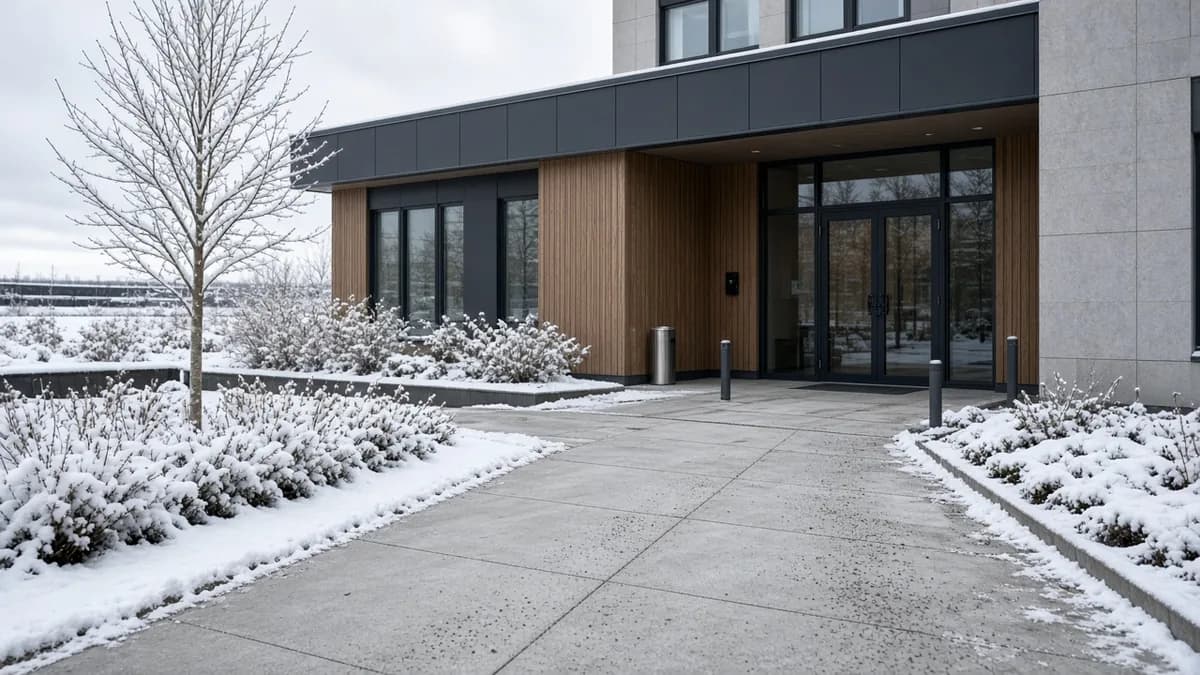
Commercial properties in Finland need snow and ice management that keeps people moving safely and operations running when winter weather arrives. The goal is not a perfect snow-free landscape every hour. It is a clear plan for entrances, routes, parking and service areas that matches how the building is used.
This guide is written for facility managers, property owners and workplace leads who need a practical operating approach. It focuses on what to decide before the first snowfall, how to set service levels, and how to work with a provider without inventing unsupported rules or statistics.
Why snow and ice management for commercial properties matters
Winter conditions affect more than kerb appeal. Slippery entrances delay deliveries, disrupt shift handovers and create avoidable incidents at the points where most people enter and leave. Loading bays, fire access routes and visitor parking also need consistent attention.
A useful plan separates high-priority movement areas from lower-priority ornamental zones. Main doors, accessible routes, pedestrian crossings on the plot, and vehicle approaches usually come first. Landscaped edges and unused yard corners can wait until the critical routes are under control.
If your building already has facilities management coverage, snow and ice work should sit inside that operating rhythm rather than as an improvised add-on each time the forecast looks difficult.
Assessing the site and its needs
Start with a short winter walk of the property, ideally before the season begins. Note where people actually walk, not only where paths are marked on drawings. Watch for:
- Primary and secondary entrances, including staff and goods doors
- Steps, ramps and level changes that hold ice
- Shade lines beside buildings where ice lingers after sunnier areas have cleared
- Drainage points that freeze and create sheets of ice
- Parking aisles, pedestrian cut-throughs and waste or recycling routes
- Roof drip lines and canopy edges that deposit meltwater onto walkways
Photograph problem spots and mark them on a simple site plan. That plan becomes the shared reference for your internal team and any external contractor. It also helps you decide where mechanical clearing is essential and where hand work or local treatment is enough.
For many Finnish commercial sites, snow and ice management works best when it is coordinated with grounds maintenance and outdoor area cleaning. Entrance mats, grit tracking and wet-floor cleaning indoors are part of the same visitor experience.
Setting service levels and frequencies
Service levels should be written in plain language. Avoid vague phrases such as “as needed”. Instead define:
- Which areas are Priority 1, 2 and 3
- The trigger for mobilisation (for example overnight snowfall above an agreed depth, freezing rain, or compacted ice on Priority 1 routes)
- Expected response windows for office hours, evenings and weekends
- Whether parking bays are cleared fully, in lanes only, or left until demand requires it
- How snow is stored or removed from the site so piles do not block sightlines or drainage
Frequency depends on use. A multi-tenant office with continuous arrivals needs earlier morning readiness than a warehouse with a single shift start. Retail and healthcare sites often need tighter entrance standards because visitor traffic is less predictable.
Agree what “ready” means. For many workplaces that means Priority 1 routes are walkable and gritted before the first major arrival window, with a follow-up pass if conditions continue. Put that definition into the purchase order or facilities agreement so expectations are measurable.
Seasonal considerations in Finland
Finnish winters vary by region and by week. Coastal areas can swing between wet snow and freeze–thaw cycles that polish surfaces into ice. Inland and northern sites may see longer periods of persistent snow cover. Your plan should assume both heavy snowfall and the quieter but riskier freeze–thaw pattern.
Build buffer into storage and logistics. Snow piles take space. If the yard is tight, agree in advance where temporary storage is allowed and when haul-away is required. Keep an eye on roof edges, canopies and balcony driplines after mild spells — meltwater that refreezes overnight is a common cause of morning incidents.
Coordinate winter outdoor work with preventive maintenance and building maintenance. Blocked drains, damaged handrails and failed external lighting make snow and ice work harder and less effective. A short autumn check of these items reduces mid-winter improvisation.
Indoors, wet entrances need matching cleaning capacity. Grit and slush travel quickly into lobbies. Align outdoor clearing with entrance cleaning so floors are not left wet for long periods during peak arrivals.
Choosing and managing a provider
Decide whether snow and ice work stays with your in-house facilities team, a specialist contractor, or a combined facilities partner. The right model depends on site size, equipment access, night and weekend coverage, and how quickly you need mobilisation.
When evaluating providers, ask for:
- A named seasonal lead and escalation contact
- Equipment list suited to your surfaces (not only large ploughs that damage paving)
- A written priority map based on your site assessment
- Clear rules for salt, grit or alternative treatments on sensitive surfaces
- Reporting after major weather events: what was done, when, and what remains
Avoid choosing only on the lowest price per visit. An inexpensive call-out that arrives after the morning peak can cost more in disruption than a structured seasonal retainer. If you already work with Manpower Global Finland on facilities services, ask how snow and ice cover connects to your wider facilities management plan so outdoor and indoor teams are not operating on separate assumptions.
Review performance after the first significant weather event, not only at season end. Adjust Priority maps if people are using informal shortcuts that the original plan ignored.
Snow and ice management checklist
Use this checklist before and during the season:
- Complete a winter site walk and mark Priority 1–3 areas
- Confirm accessible routes and fire access remain clear under the plan
- Agree mobilisation triggers and response windows in writing
- Confirm snow storage or haul-away arrangements
- Check drains, lighting, handrails and entrance matting
- Align outdoor clearing with indoor entrance cleaning
- Store contractor contacts and escalation paths where the duty team can find them
- Review the plan after the first major snowfall or ice event
Frequently asked questions
When should a commercial property finalise its winter snow plan?
Finalise the plan in autumn, before routine snowfall begins. Equipment, access agreements and Priority maps are harder to arrange after the first difficult morning.
Is full site clearing always necessary?
No. Most commercial sites benefit from a Priority-based approach that keeps movement routes safe first. Full ornamental clearing can wait unless appearance or specific tenant requirements demand it.
How do snow and ice services connect to wider facilities management?
Outdoor winter work affects entrances, cleaning, waste routes and sometimes maintenance access. Treating it as part of facilities management reduces gaps between outdoor crews and indoor teams.
What should be reported after a major weather event?
A short operational report is enough: areas completed, times of passes, remaining risks, and any damage or blocked drains found during the work.
Next steps
If your property still relies on ad-hoc call-outs, convert the current season into a written Priority map and response agreement. Start with entrances and accessible routes, then extend coverage to parking and service yards.
For support with snow and ice operations as part of a broader facilities plan, request a quote or ask for a facilities assessment through Manpower Global Finland. A clear seasonal plan is easier to run than a sequence of emergency visits once winter is already in place.