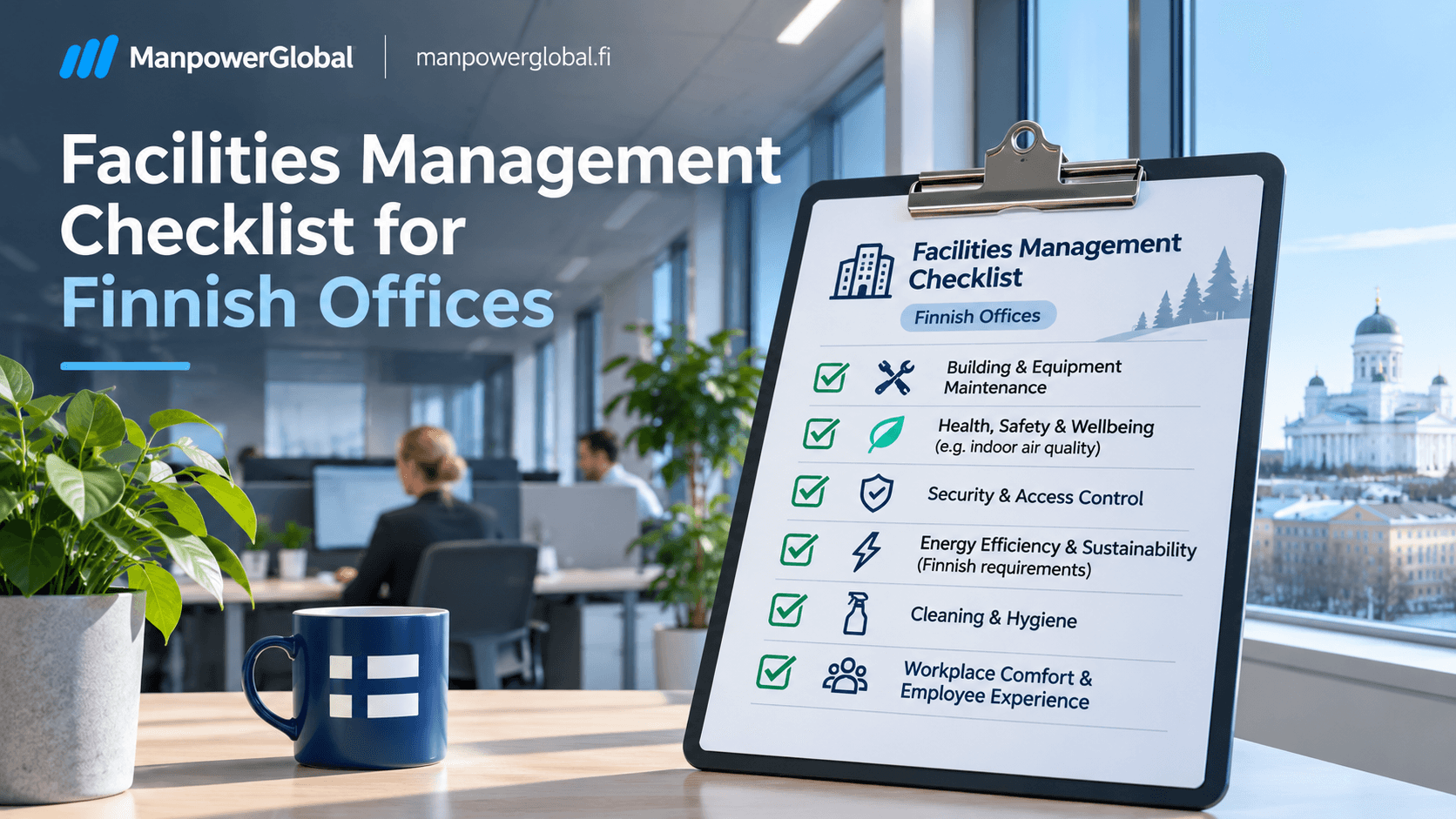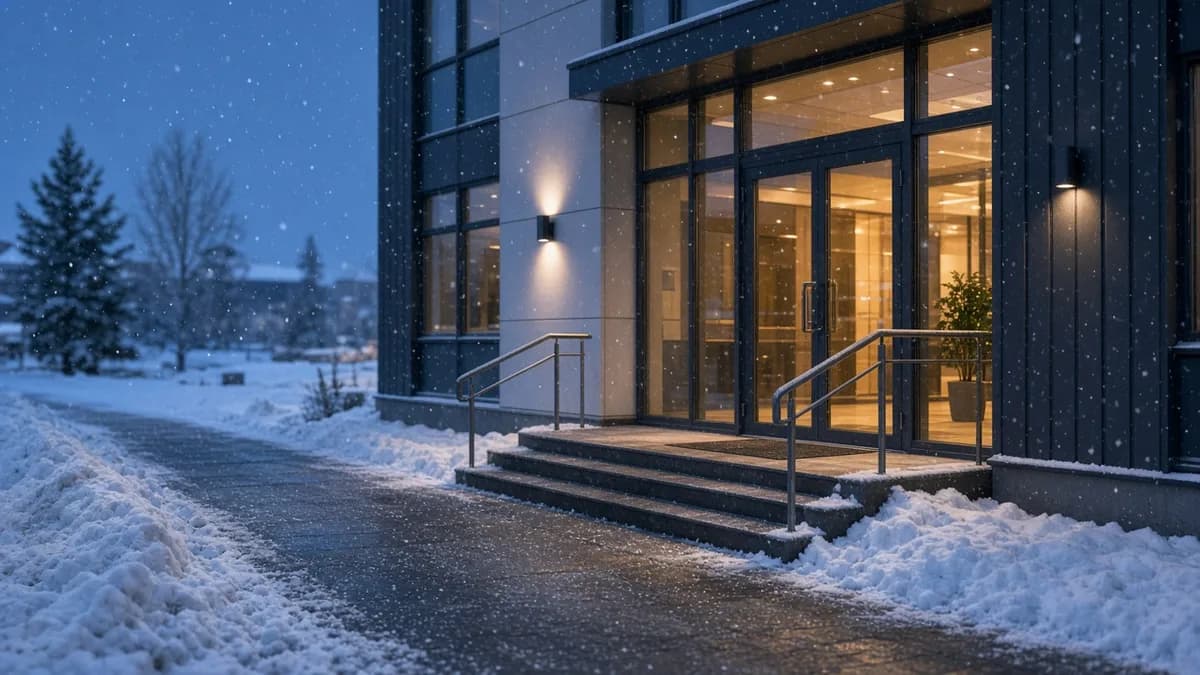
A commercial building maintenance plan works best when it turns routine inspections into clear actions, assigned responsibilities and follow-up. In Finland, changing seasons make forward planning especially useful: teams may need to prepare entrances, external areas and building systems before winter conditions arrive, then review how they performed afterwards.
This preventive maintenance checklist for commercial buildings is a starting point for property managers, FM teams and building owners. Adapt it to the building’s age, use, installed equipment, service agreements and site-specific requirements. It does not replace technical inspections or work by appropriately qualified service providers.
Why preventive maintenance matters for Finnish commercial buildings
A planned approach helps teams notice deterioration and operational issues before they become urgent work. It also makes it easier to organise access, coordinate contractors and keep a record of decisions. The aim is not to inspect everything at the same frequency, but to make sure important tasks have an owner, a suitable schedule and a documented outcome.
Finnish buildings face seasonal changes that can affect how a site is used and maintained. Before winter, property teams can review heating, entrances, external lighting, drainage and arrangements for snow and ice. During colder months, they can monitor reported comfort or indoor air concerns and check that agreed maintenance visits are taking place. In spring, they can assess external areas and note any damage or deferred work.
Conditions and responsibilities differ between properties. Confirm what applies to the site and who is responsible for each task before work is scheduled. A structured preventive maintenance programme can bring these activities together rather than leaving them as disconnected reminders.
What to review first
Start with a clear picture of the building. Before setting inspection intervals, gather the information needed to make the plan practical:
- **Building use and occupancy:** Note how the site is used, when it is busiest and whether any areas have specific operating needs.
- **Building and system information:** Collect available drawings, equipment details, operating instructions, previous service records and open maintenance issues.
- **Current condition:** Walk the site with relevant staff or service providers. Record visible defects, recurring complaints, access issues and areas that need closer technical review.
- **Existing agreements:** Check service contracts, landlord and tenant arrangements, warranties and any other agreed division of work.
- **Risks and priorities:** Identify issues that could disrupt building use, affect people’s experience of the premises or cause further damage if left unresolved.
- **Seasonal tasks:** Mark activities that need to happen before or after winter, while leaving enough time for planning, procurement and contractor access.
Use the initial review to distinguish routine checks from specialist work. Staff may be able to report visible changes or operational concerns, while inspection, adjustment or repair of technical systems may need a service provider. The appropriate approach depends on the equipment, task and site arrangements.
For a broader view of ongoing property needs, see building maintenance. The checklist should reflect the building itself, not simply copy a generic schedule.
Planning responsibilities and schedules
A useful plan states what is checked, when it is due, who carries it out and where the result is recorded. Assigning a task to a named role or provider reduces the chance that it will be overlooked between teams.
Create a simple maintenance calendar that separates recurring work, seasonal preparation, planned upgrades and follow-up actions. Set intervals using equipment guidance, condition, operating needs and advice from the relevant service provider. Avoid applying one frequency to every system without checking whether it is suitable for that property.
For each task, record:
- The asset, location or building area involved.
- The inspection, service or maintenance action required.
- The planned timing or trigger for the work.
- The responsible person, team or contractor.
- Any access, safety or operational arrangements to confirm in advance.
- The result, any defects found and the next action, owner and target date.
Clarify how urgent issues are reported and escalated, and how completed work is signed off. If a task cannot be completed as planned, record why and agree a revised date or alternative action. A maintenance schedule is most useful when someone reviews open items and updates it as the building or its use changes.
Working with service providers
Service providers can help assess system condition, recommend appropriate maintenance intervals and complete specialist work. Provide them with relevant building information and a clear description of the required outcome. Agree how visits will be scheduled, what records will be supplied and how defects or additional work will be raised for approval.
Coordinate work across systems where possible, while allowing each provider to follow appropriate procedures for their tasks. Depending on the building, planned maintenance may include:
- **Heating and ventilation:** Review operating condition, service arrangements, reported comfort issues and seasonal changeover needs. See HVAC services and heating system maintenance.
- **Electrical and plumbing systems:** Record reported faults, visible concerns and required service visits. Inspection and repair should be assigned according to the system and task. See electrical and plumbing.
- **Indoor conditions:** Track recurring reports about temperature, odours, draughts or other indoor air concerns, and agree how they will be assessed. For support, see indoor air quality support.
- **Building fabric and shared areas:** Review roofs, façades, doors, windows, internal finishes and circulation areas for visible deterioration or damage that needs further assessment.
- **Safety-related systems:** Confirm the site’s maintenance arrangements, responsible parties and records for relevant systems. Any requirements and testing schedules should be checked against the applicable site arrangements and advice from competent providers.
Give contractors practical information about access, occupied areas and building operations. After a visit, check that the report identifies work completed, observations, outstanding issues and any recommended next steps. Keep approvals for additional work clear so recommendations do not disappear between a service visit and a decision.
A joined-up Facilities Management approach can help coordinate building services and planned work. The right model depends on the property and the responsibilities already in place; Integrated facilities management is one option to consider where coordination across services is a priority.
Common pitfalls to avoid
- **Using a generic checklist without adapting it:** A checklist is a prompt, not a substitute for information about the site’s systems, condition and use.
- **Treating a visual check as a technical inspection:** Record visible issues, but arrange suitable assessment where specialist knowledge or testing is needed.
- **Leaving ownership unclear:** State whether the owner, tenant, FM team or service provider is expected to act, and check that the arrangement matches the relevant agreement.
- **Planning winter work too late:** Use October–November as a practical prompt to review winter readiness, but consider local conditions, contractor availability and the property’s needs when setting dates.
- **Recording findings without follow-up:** Give each issue an owner and next step, then review open actions regularly.
- **Ignoring repeated reports:** Recurring comfort or building-performance concerns may warrant investigation rather than repeated short-term fixes. Record when and where they occur and share that information with the relevant provider.
- **Keeping records in disconnected places:** Store schedules, visit reports and action logs so the people responsible can find and update them.
Preventive maintenance checklist for Finnish commercial buildings
Use this checklist to organise a site review and build a maintenance calendar. Not every item will apply to every property. Confirm task scope, timing and responsibility for the specific building.
**Building fabric and external areas**
- Review visible condition of roofs, façades, windows, doors and external finishes; refer concerns for closer assessment.
- Check entrances, paths and access points for visible defects or obstructions.
- Confirm who arranges snow and ice preparation, monitoring and response for relevant areas, and how the service is coordinated.
- Review external lighting and drainage for reported faults or visible problems.
- After winter, record any damage or deterioration that needs assessment or repair.
**Heating, ventilation and indoor conditions**
- Confirm planned service visits and responsibilities for heating and ventilation equipment.
- Review operating concerns and recurring reports about temperature, ventilation, draughts or odours.
- Agree how reported indoor air concerns will be recorded, investigated and followed up.
- Before colder weather, confirm that relevant seasonal checks and planned maintenance have been scheduled.
- Record provider findings and track recommended actions to completion.
**Electrical, plumbing and other building systems**
- Review service arrangements and open maintenance issues for electrical and plumbing systems.
- Record reported leaks, drainage concerns, faults or unusual changes and route them to the appropriate provider.
- Confirm the maintenance and record-keeping arrangements for relevant safety-related systems.
- Check that technical work is assigned to a provider suited to the task and documented appropriately.
**Responsibilities and records**
- Keep an up-to-date asset or equipment list where available, including location and relevant service information.
- Maintain a calendar for recurring, seasonal and condition-based work.
- Record who owns each task, how it is completed and where results are stored.
- Keep service reports, defect records, approvals and completion notes together or clearly cross-referenced.
- Review overdue and open actions with the responsible parties.
- Revisit the plan when equipment, building use, service arrangements or site conditions change.
Frequently asked questions
What does a preventive maintenance checklist involve for a commercial property?
It is a practical record of planned inspections and maintenance tasks, including who is responsible, when work is due and how findings will be followed up. It may cover the building fabric, heating and ventilation, electrical and plumbing systems, external areas, safety-related systems and maintenance records. The checklist should be adapted to the individual property.
How early should we plan preventive maintenance?
Plan recurring maintenance throughout the year and schedule seasonal preparation ahead of the conditions it addresses. For winter readiness, October–November can be a useful review period, but timing should reflect the site, local conditions and provider availability. Confirm dates with the relevant service providers rather than relying on a single calendar date.
Who is responsible: the owner, tenant or service provider?
Responsibility depends on the building, the relevant agreements and the specific task. Clarify who arranges inspections, approves work, provides access and follows up defects. Service providers may carry out agreed work, but the property’s arrangements should make clear who reviews findings and authorises next steps.
How do we get a quote or assessment for a preventive maintenance checklist?
Prepare a short overview of the property, its use, known maintenance concerns, available system information and current service arrangements. This helps a provider understand the scope and identify what further information is needed. Contact us to Book a preventive maintenance review.